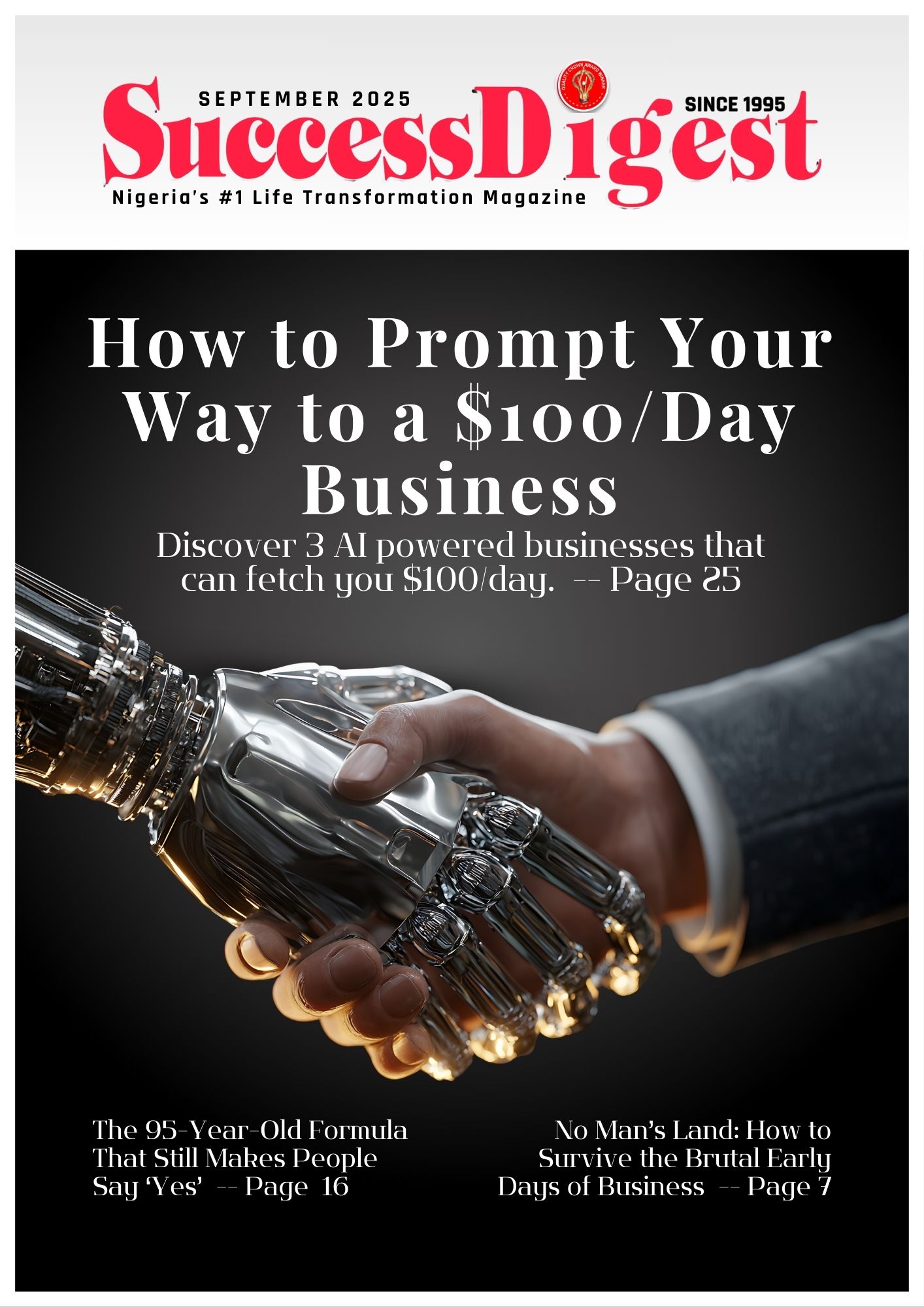



In 2026, home-based businesses won’t “guess and launch” the way many entrepreneurs used to. They’ll launch with confidence—because AI will shrink weeks of market research into minutes. Instead of spending nights buried in spreadsheets, reviews, and competitor websites, small business owners will use AI to uncover unmet customer needs, identify profitable niches, validate pricing, and generate product or service ideas that match real demand.
This shift isn’t about replacing the entrepreneur’s creativity—it’s about amplifying it. AI will act like a rapid research assistant: scanning signals, summarizing insights, and turning messy market noise into clear next steps. For home-based businesses—where time is limited and budgets are lean—this is a growth advantage that feels almost unfair.
The 2026 reality: speed wins (and AI creates speed)
Home-based entrepreneurs often face the same challenge: you don’t have a full team. You might be juggling a day job, family obligations, and limited capital. Traditional market research can be slow and expensive—surveys, focus groups, paid reports, or weeks of manual competitor analysis.
In 2026, AI tools make that process faster, cheaper, and more reliable by:
-
Finding patterns across reviews, comments, and forums
-
Summarizing what customers actually complain about
-
Spotting trends early before they become saturated
-
Estimating buyer intent based on language and behavior cues
-
Generating multiple niche ideas tailored to your skills and constraints
The result: more launches, better launches, and fewer wasted months building something the market never asked for.
How AI generates product & service ideas in minutes
AI-driven ideation in 2026 starts with inputs—your skills, your target customer, your price range, and your preferred business model. From there, AI can produce idea lists that aren’t generic. The best systems will combine multiple research layers to create “evidence-backed ideas,” such as:
-
Service packages based on common customer requests (done-for-you, done-with-you, coaching)
-
Micro-products that solve one urgent pain (templates, mini-courses, calculators, checklists)
-
Subscription services built around recurring needs (maintenance, content, reporting, support)
-
Local-first offers tailored to a specific city/region’s demographics and demand
-
High-margin add-ons that increase average order value without extra complexity
Instead of brainstorming randomly, home-based owners will run an AI “idea sprint,” generating 30–100 possibilities, then narrowing to the top 3 using data signals.
Customer pain mining: turning complaints into cash
One of the most powerful uses of AI in 2026 is “pain mining.” AI will scan customer reviews, Reddit threads, YouTube comments, Facebook groups, Amazon listings, app store reviews, and competitor testimonials to identify recurring frustrations. These complaints often point directly to product opportunities.
For example, AI might detect themes like:
-
“Customer support takes forever”
-
“It’s too complicated to set up”
-
“The results aren’t consistent”
-
“I wish there was a version for beginners”
-
“I need this faster, simpler, or cheaper”
A home-based entrepreneur can then create a solution that’s positioned as the fix. That might be a simplified service, a beginner-friendly package, a streamlined product, or a curated “done-for-you” alternative.
In other words: AI helps you build what people are already asking for—without you manually reading 2,000 reviews.
Competitor analysis without the headache
In 2026, competitor research won’t require 47 browser tabs and a full Saturday. AI will instantly analyze competitor offerings, including:
-
Pricing tiers and what’s included
-
Positioning and messaging (“who is this for?”)
-
Feature gaps and customer complaints
-
Upsells, bundles, and retention strategies
-
Differentiation opportunities
This is huge for home-based businesses because it reduces the risk of entering a market blindly. AI can highlight “white space”—areas where customers are underserved. You can then craft an offer that competes on clarity, speed, specialization, or results.
Trend detection: catching waves early
By 2026, AI trend tools will function like radar. They won’t just show what’s popular—they’ll show what’s about to be popular. AI will track early signals across search queries, social media, marketplaces, newsletters, and niche communities, then translate that into opportunity.
That means home-based business owners can:
-
Create content ahead of competitors
-
Launch niche offers before the market crowds in
-
Build authority early in a rising category
-
Test multiple micro-niches quickly
Trend advantage matters because the earliest entrants often earn the most attention, backlinks, partnerships, and organic traffic.
Rapid validation: from idea to “yes/no” fast
AI doesn’t just create ideas—it helps validate them. In 2026, home-based businesses will use AI to run “validation loops” in a single afternoon:
-
Define target buyer (role, budget, urgency, values)
-
Test positioning statements (which angle is strongest?)
-
Generate landing page copy with multiple variants
-
Draft simple survey questions and analyze responses
-
Estimate price sensitivity based on competitor comparisons
-
Create a minimum viable offer (MVO) in hours, not weeks
This speeds up decision-making. Instead of falling in love with an idea and spending months building it, entrepreneurs will test demand early, adjust quickly, and move forward only when the signals are strong.
Automation makes research repeatable, not exhausting
The biggest win in 2026 isn’t just speed—it’s repeatability. Once an AI research workflow is set up, a home-based business can run it weekly or monthly like a system.
For example, an automated pipeline could:
-
Monitor competitor updates and price changes
-
Track new customer questions in communities
-
Summarize trending topics in a niche
-
Suggest new offer ideas based on emerging needs
-
Draft content outlines and ad angles tied to those needs
This is how small businesses scale: not by working harder, but by creating systems that produce insights and opportunities consistently.
The businesses that win in 2026 will be “AI-assisted, human-led”
AI will not replace the human entrepreneur. Customers still want trust, personality, and a real understanding of their situation. The winners in 2026 will combine AI speed with human judgment:
-
AI finds the patterns; you choose the best direction
-
AI suggests offers; you add authenticity and expertise
-
AI drafts messaging; you shape the brand voice
-
AI spots demand; you deliver a great customer experience
The home-based business advantage has always been agility. In 2026, AI multiplies that agility—helping you research faster, build smarter, and launch with more confidence than ever before.
If market research used to be a bottleneck, AI turns it into a superpower. And for home-based entrepreneurs who move quickly, that superpower can translate into real growth—without burning out.