
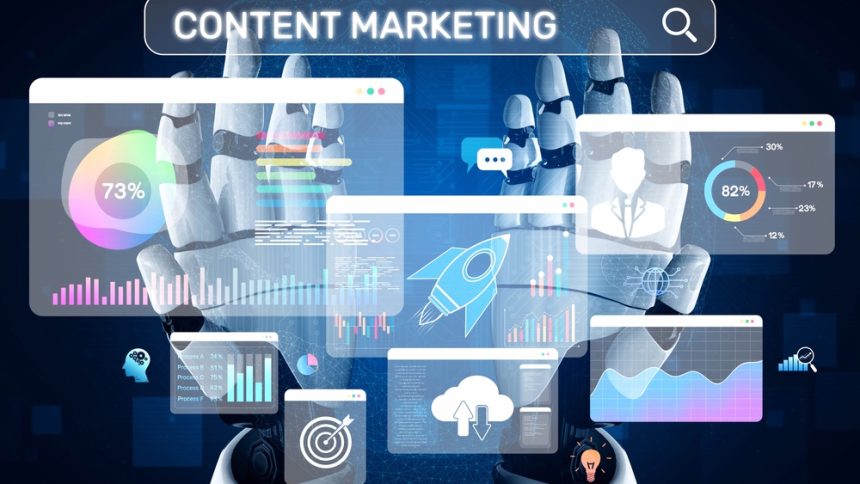

In 2026, content won’t just be “part of marketing” for home-based businesses—it will be the engine that drives growth. The challenge is that most entrepreneurs don’t have unlimited time, staff, or budget. They’re balancing client work, fulfillment, admin tasks, and family responsibilities while trying to stay visible online. That’s why AI-assisted content creation is becoming the ultimate competitive advantage: it helps small, home-based teams publish more consistently, produce higher-quality content, and automate marketing tasks that used to take hours.
AI won’t replace creativity or the human voice behind a brand. Instead, it will function like a “micro content studio” in your home office—turning ideas into assets, repurposing content across channels, and helping you move from sporadic posting to a repeatable content system that generates leads week after week.
1) From “Posting When You Have Time” to Always-On Publishing
One of the biggest reasons home-based businesses struggle with marketing is inconsistency. A burst of posting here, a quiet month there—and results follow that same pattern. In 2026, AI-assisted content creation will solve this by enabling always-on publishing.
Instead of wondering what to post, business owners will use AI to:
-
Generate weekly content calendars aligned to goals (lead generation, sales, awareness)
-
Create batches of social captions, blog outlines, and email drafts
-
Maintain consistent tone and style across platforms
This creates something many small brands never fully achieve: momentum. When you publish consistently, you stay top-of-mind, train the algorithms to recognize your activity, and build trust faster with your audience.
2) AI as a Repurposing Machine: One Idea, 20 Assets
In 2026, smart home-based businesses won’t create content from scratch every day. They’ll start with one “pillar” piece of content and let AI repurpose it into multiple formats.
For example, you record a 10-minute video answering a common customer question. AI can transform that into:
-
A blog post optimized for search
-
5–10 short social posts
-
A carousel script for Instagram/LinkedIn
-
A short email newsletter
-
A YouTube description and chapter timestamps
-
FAQ snippets for your website
-
A lead magnet outline or checklist
This is where growth meets automation: you stop trading hours for content and start building a system where every idea multiplies.
3) SEO Gets Simpler—and More Scalable
Search traffic remains one of the best long-term assets for home-based businesses because it can generate leads while you sleep. In 2026, AI will make SEO more approachable by helping business owners research topics, map keywords to pages, and produce content that matches search intent.
AI-assisted SEO workflows will commonly include:
-
Finding high-intent long-tail keywords (questions people are actively searching)
-
Building topic clusters (main pillar + related supporting articles)
-
Drafting optimized headings, meta descriptions, and FAQs
-
Updating older posts to improve rankings and freshness
Instead of writing a blog post once and moving on, businesses will use AI to treat content like an asset that gets improved over time—raising rankings, increasing clicks, and generating more leads with less manual effort.
4) Hyper-Personalized Content Without a Big Team
Personalization is what turns attention into customers. In the past, personalization at scale required advanced tools and big budgets. In 2026, AI will make personalization realistic for solo entrepreneurs and small home-based teams.
AI can help tailor content based on:
-
Industry (realtors vs. contractors vs. coaches)
-
Buyer stage (awareness vs. comparison vs. ready to buy)
-
Location (city-specific landing pages and local content)
-
Past behavior (email segments based on what a lead clicked)
That means instead of one generic message, you can deliver the right message to the right person at the right time—without writing everything manually.
5) Creative Support for Visuals, Video, and Branding
Home-based businesses often know what they want to say, but visuals and video production can be a barrier. In 2026, AI-assisted creation will help entrepreneurs produce marketing materials that look polished even without a designer or editor on staff.
Expect common AI-driven tasks like:
-
Turning blog posts into branded social graphics
-
Generating video scripts, hooks, and talking points
-
Creating short-form video captions and overlays
-
Producing consistent brand voice guidelines for all content
-
Speeding up editing with auto-cuts, highlights, and summaries
The result is a stronger brand presence—more “professional” output—without the costs of a full creative department.
6) Faster Launches: Content Systems for Offers and Promotions
Whether you’re launching a new service package, opening spots for clients, or running a limited-time promo, the difference between a mediocre launch and a successful one often comes down to marketing execution.
In 2026, AI will help home-based businesses launch faster by generating:
-
Promo email sequences
-
Landing page copy
-
Social media campaign themes
-
Webinar outlines and follow-up content
-
Objection-handling posts (price, timing, trust, results)
Instead of spending weeks building a launch plan, you’ll be able to build the core assets in days—then refine and personalize with your own real experience and customer language.
7) Automation That Connects Content to Leads and Sales
The real power of AI-assisted content creation in 2026 won’t just be writing faster—it will be connecting content to automated workflows that drive revenue.
Home-based businesses will set up systems like:
-
A blog post that automatically feeds an email sequence
-
A lead magnet that triggers a nurture campaign
-
Social posts that route DMs into a CRM pipeline
-
Website FAQs that evolve based on customer questions
-
Content performance reports that recommend what to publish next
This closes the loop: content doesn’t just “exist,” it becomes part of a measurable engine that generates leads, nurtures prospects, and supports sales.
8) The Human Edge: Authenticity Wins in an AI World
As more businesses use AI, audiences will become more sensitive to content that feels generic. The winners in 2026 will be the home-based brands that use AI to amplify authentic expertise—not replace it.
The best approach is simple:
-
Use AI for speed, structure, and repurposing
-
Use your human voice for stories, opinions, case studies, and credibility
-
Combine both to produce high-volume content that still feels real
Your unique advantage is your lived experience—your customers, your results, your local insights, your process. AI helps you communicate that more often and more effectively.
Final Takeaway
In 2026, AI-assisted content creation will be a growth multiplier for home-based businesses because it makes marketing consistent, scalable, and automated. It will help entrepreneurs produce more content in less time, repurpose ideas into dozens of assets, personalize messaging, and connect content to lead-generation workflows. The businesses that thrive won’t be the ones who “use AI the most.” They’ll be the ones who build a smart content system—where AI handles the heavy lifting and the business owner provides the insight and authenticity that customers trust.